
The Most Magnificent Historic Hotels in Asia for Heritage Lovers
Across the vast continent of Asia, centuries of dynastic grandeur, artistic innovation, and international trade have created an extraordinary architectural heritage. While modern travelers frequently admire ancient temples, royal palaces, and historic riverside quarters from the outside, residing within a living heritage property transforms a standard journey into an unforgettable cultural encounter. Staying inside Asia’s finest historic hotels lets you walk through graceful verandas where royal emissaries negotiated treaties, literary masters penned celebrated classics, and global voyagers gathered over timeless cocktails.
Rather than choosing sterile modern skyscrapers, discerning travelers increasingly seek properties defined by bespoke craftsmanship, storied histories, and enduring regional charm. From faithfully restored fortress-palaces nestled in the rugged hills of central India to colonial Dutch military strongholds in Sri Lanka and grand French quarters in Vietnam, these landmark addresses offer a tangible connection to the past. Here are six of the best historic hotels in Asia where you can immerse yourself in living history without sacrificing an ounce of luxurious contemporary comfort.
1. Raffles Singapore
Regarded as the quintessential grand dame of Southeast Asian hospitality, Raffles Singapore remains a timeless neoclassical sanctuary in the heart of Singapore’s bustling urban landscape. Founded in 1887 by the entrepreneurial Sarkies brothers, the property originated as an intimate ten-room beachside bungalow. Over nearly 140 years, it has transformed into a world-renowned retreat featuring 115 elegant suites bordered by fragrant tropical courtyards and tranquil shaded verandas.
History permeates every corridor, from the heirloom grandfather clock standing tall in the reception foyer to vintage photographs proudly displayed in the Hall of Fame. Notable past guests who walked these halls include Rudyard Kipling, Somerset Maugham, Elizabeth Taylor, and Charlie Chaplin. Guests can also join fascinating daily heritage tours conducted by the resident historian to explore the hotel’s long and colorful past.
Planning Tip: Afternoon tea amidst the soaring marble colonnades of The Grand Lobby offers a delightful way to absorb the hotel’s aristocratic atmosphere. Afterward, stop by the storied Long Bar to order an authentic Singapore Sling, invented right here in 1915 by bartender Ngiam Tong Boon, while enjoying the quirky tradition of tossing peanut shells directly onto the polished floorboards.
2. Sofitel Legend Metropole Hanoi, Vietnam
Located in Hanoi’s atmospheric French Quarter near picturesque Hoan Kiem Lake, the Sofitel Legend Metropole Hanoi has anchored Vietnamese luxury travel since its grand opening in 1901. Built during the French colonial era, the hotel quickly gained a reputation as the premier social salon for international diplomats, correspondents, and visiting foreign dignitaries.
The Metropole served as an eyewitness to some of the most pivotal events of the 20th century. During World War II, French authorities used the hotel as regional administrative headquarters, while during the Vietnam War, international peace advocates including actress Jane Fonda and folk singer Joan Baez took shelter within its fortified grounds. In 2011, hotel engineers uncovered an intact underground air raid shelter where Baez famously recorded music during wartime bombardments.
Planning Tip: In-house guests can participate in a complimentary daily tour of the preserved bomb shelter, accompanied by an evocative historical audio presentation. For maximum historic character, reserve a suite in the original Metropole Wing, which showcases dark hardwood floors, period louvered shutters, and elegant wrought-iron balconies.
3. Imperial Hotel, Kyoto, Japan
Kyoto is the cultural capital of traditional Japanese arts, and the Imperial Hotel’s sanctuary within the historic Yasaka Kaikan building in Gion provides an unparalleled connection to classic heritage. Erected in 1936 adjacent to the renowned Gion Kobu Kaburenjo theater, Yasaka Kaikan was long celebrated as a cultural venue where geiko (Kyoto geishas) and maiko (apprentice artists) gathered to perfect their traditional dance crafts.
Following a painstaking restoration by the very construction company that built the original venue ninety years earlier, the building was reimagined as an exclusive 55-room luxury hotel. Master craftspeople preserved over 16,000 exterior terracotta tiles while integrating advanced earthquake-resistant engineering. Guests enjoy exclusive access to traditional tea ceremonies conducted by apprentice maiko, alongside special admission privileges for the annual Miyako Odori spring dances.
Planning Tip: While spring cherry blossom season brings peak traveler numbers to Kyoto, April remains hands-down the most enchanting time to visit, as your stay perfectly aligns with the vibrant performances of the Miyako Odori festival.
4. Amangalla, Galle, Sri Lanka
Set within the massive ramparts of the UNESCO-listed Galle Fort on Sri Lanka’s southern coast, Amangalla is steeped in centuries of colonial maritime history. Constructed in 1684 by the Dutch East India Company, the mansion originally housed the Dutch military commander and his administrative officers. Following British colonization, the complex accommodated soldiers and officers from the 83rd Regiment of Foot.
In 1863, the property reopened as the legendary New Oriental Hotel, catering to steamship passengers and merchants traveling trade routes between Europe and Asia. Now restored under the Aman banner, the hotel retains original Burma teak flooring, 19th-century mosaic tilework, graceful arched windows, and an authentic 1800s military safe in the Great Hall.
Planning Tip: Afternoon tea served on the shaded veranda of Amangalla is legendary across southern Sri Lanka. The tiered service features freshly baked scones with highland strawberry jam, traditional coconut cakes, and premium loose-leaf Ceylon teas or fragrant local spiced hot chocolate.
5. The Oberoi Rajgarh Palace, Khajuraho, India
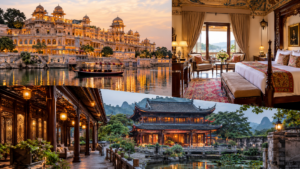
Perched high in the forested hills of Madhya Pradesh, The Oberoi Rajgarh Palace offers an authentic stay inside a genuine royal retreat. Built more than 350 years ago as an imposing sandstone hill fortress by the rulers of the Bundela dynasty, the stronghold expanded over generations to include sprawling courtyards, frescoed chambers, and grand reception halls.
Following an extensive 30-year restoration by the Oberoi Group, this 65-room palace provides a regal refuge. Guests can admire hand-carved stone arches, intricate frescoes, and historic temples within the palace grounds. The property also serves as an ideal gateway to the UNESCO-listed medieval stone temples of Khajuraho and wilderness wildlife safaris in nearby Panna National Park.
Planning Tip: Panna National Park closes during the monsoon season from July through September. Schedule your trip between November and March for cool weather, ideal temple exploration, and top-tier tiger tracking opportunities.
6. The Langham, Custom House, Bangkok, Thailand
Positioned along the lively banks of the Chao Phraya River, The Langham, Custom House brings new life to one of Bangkok’s most storied riverside landmarks. Constructed in 1888 during the reign of King Rama V, this neoclassical building served as the main maritime customs house for foreign merchants, envoys, and sea captains arriving in the Kingdom of Siam.
Throughout its history, the building hosted royal banquets and one of Thailand’s first postal stations. A dedicated conservation initiative restored the original ochre facade and recovered historic ceramics from the riverbed. A contemporary wing houses 75 guest rooms adorned with subtle Thai patterns, while the heritage wing features refined culinary options, including Hong Kong’s three-Michelin-starred Cantonese restaurant, T’ang Court.
Planning Tip: Use the hotel’s private river shuttle to explore Bangkok’s riverside creative district, hopping effortlessly between historic temples, boutique artisan shops, and contemporary art galleries.
Frequently Asked Questions
Why choose a historic hotel over a standard modern resort?
Heritage hotels deliver an authentic sense of place that standard chains cannot replicate. Featuring period architecture, museum-grade artwork, and centuries of local stories, your accommodation becomes a captivating centerpiece of your travel memories rather than merely a bed for the night.
Are modern amenities included in these historic properties?
Yes. Comprehensive restorations seamlessly incorporate high-speed Wi-Fi, modern climate control, marble en-suite bathrooms, and fine dining while safeguarding historical woodwork, original masonry, and antique fixtures.
When should I book a heritage stay in Asia?
Due to limited room counts in boutique properties like Amangalla and the Imperial Hotel, reserve your stay four to six months in advance, especially during seasonal festivals or peak holiday months.