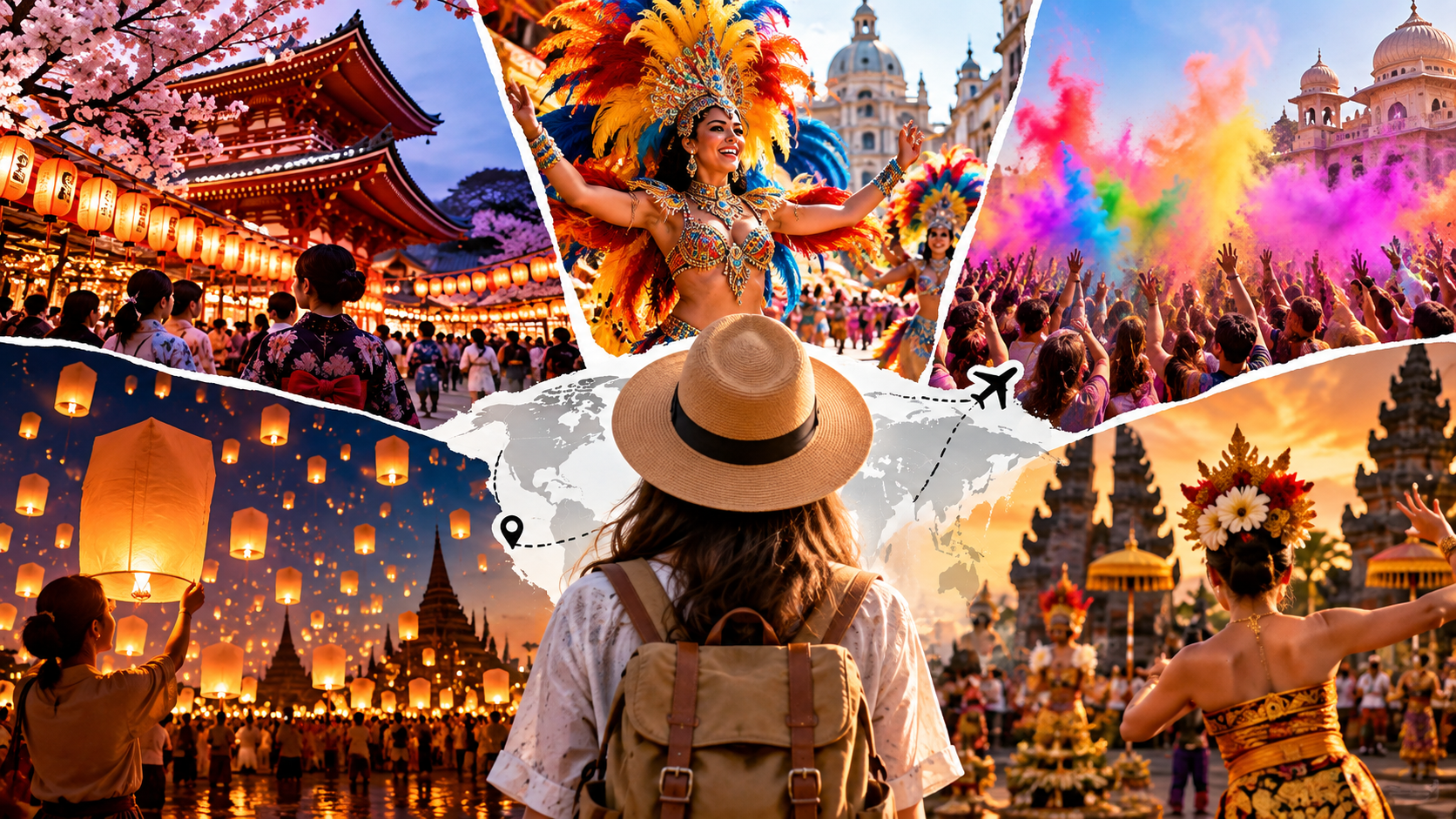

Cultural festivals serve as the vibrant, beating heart of societies around the globe. They offer travelers a profoundly unique, unfiltered window into the ancient traditions, deeply held beliefs, and joyous customs that have shaped communities for centuries. These extraordinary celebrations are often characterized by thundering parades, mesmerizing traditional music, elaborate costumes, and authentic cuisine you simply cannot find in a restaurant. Whether you consider yourself a highly seasoned global backpacker or someone who loves to explore the world’s rich tapestry of cultures from afar, physically attending these iconic festivals can be an utterly life-changing adventure. If you are looking to elevate your future travel itineraries with unforgettable, immersive experiences, here are five spectacular cultural festivals you absolutely must experience at least once in your lifetime.
Rio Carnival, Brazil
History and Significance
Held in the sun-drenched, famously energetic city of Rio de Janeiro, the Rio Carnival is universally recognized as the largest and most spectacular carnival celebration on the planet, consistently drawing millions of ecstatic visitors every year. The roots of this monumental festival trace back to the early 18th century, originating when Portuguese colonists brought over the European tradition of hosting massive feasts in the days preceding Lent. Over the centuries, the festival absorbed the rich, rhythmic influences of African culture, evolving into the explosive, samba-driven spectacle of national pride and unity that we know today.
Highlights
Samba Parades: The absolute pinnacle of the Rio Carnival takes place within the massive Sambadrome. Here, the city’s top samba schools fiercely compete against one another, delivering elaborately choreographed performances featuring gigantic floats.
Street Parties: Known locally as “blocos,” these massive, organized street parties effectively shut down the entire city. They fill every neighborhood with live brass bands, relentless dancing, and an incredibly joyous atmosphere.
Costumes and Masks: Participants and spectators alike don extravagantly feathered, brightly colored costumes and intricate masks, adding layers of dazzling visual flair to the city streets.
Diwali, India
History and Significance
Diwali, universally known as the Festival of Lights, stands as one of the most culturally and spiritually significant Hindu festivals on the calendar. At its core, Diwali symbolizes the ultimate, undeniable victory of light over darkness and good over evil. Spanning five glorious days, the festival primarily commemorates the legendary return of Lord Rama to his home kingdom of Ayodhya after 14 years of arduous exile. Today, it is celebrated with immense fervor across India and the global Indian diaspora.
Highlights
Lighting of Diyas: The most iconic visual of Diwali is the illumination of spaces. Millions of small, traditional clay oil lamps known as diyas are placed around homes, temples, and rivers, creating a mesmerizing glow.
Fireworks: As night falls, the sky across the entire country erupts in a deafening, spectacular display of fireworks, visually reinforcing the theme of light triumphing over the dark night.
Rangoli Designs: Intricate, beautifully geometric rangoli patterns—crafted from colored rice powders, sand, and flower petals—are created at the entrances of homes to welcome prosperity and the goddess Lakshmi.
Oktoberfest, Germany
History and Significance
Held annually in the heart of Munich, Bavaria, Oktoberfest has earned the undisputed title of the world’s largest and most famous Volksfest. The festival’s origins date back to October 1810, when it was initially organized as a grand celebration to honor the royal wedding of Crown Prince Ludwig and Princess Therese. What started as a horse race and royal feast has transformed into a massive 16-to-18-day cultural phenomenon that attracts over six million beer enthusiasts and cultural travelers from every corner of the globe.
Highlights
Beer Tents: The festival grounds feature over 30 massive, incredibly ornate beer tents sponsored by historic Munich breweries. Each tent offers a completely unique atmosphere, serving millions of liters of strong Oktoberfest beer.
Traditional Music and Dance: The air inside the tents is thick with the sounds of live Oompah bands playing traditional Bavarian folk music, encouraging visitors to sing along, lock arms, and dance on the wooden benches.
Traditional Attire: A vast majority of attendees proudly wear traditional Bavarian outfits, with men sporting leather lederhosen and women wearing beautifully embroidered dirndl dresses.
Carnival of Venice, Italy
History and Significance
The Carnival of Venice is deeply rooted in the 12th century, having allegedly begun as a public celebration following the Venetian Republic’s military victory in 1162. For centuries, it served as a time of immense opulence, mystery, and social subversion, where the strict class hierarchies of Venice were temporarily dissolved through the anonymity provided by masks. Banned for decades during the 18th century, the festival was joyously revived in 1979 and now serves as a brilliant homage to the history, art, and romantic culture of this floating city.
Highlights
Masquerade Balls: The festival is famous for its highly exclusive, incredibly elegant masquerade balls held within historic, candlelit Venetian palazzos, where guests dress in stunning period costumes and elaborate masks.
Grand Parade: St. Mark’s Square transforms into a living theater, hosting a grand parade filled with costumed participants, acrobats, and musicians, all set against the backdrop of the stunning basilica.
Art and Theater: Beyond the parties, the festival is a celebration of Venetian culture, featuring a packed schedule of art exhibitions, historical theatrical performances, and classical music concerts.
Chinese New Year, China
History and Significance
Chinese New Year, formally known as the Spring Festival, is the most crucial and widely celebrated traditional holiday in China, marking the beginning of the new year on the lunisolar Chinese calendar. With a deep history stretching back over 4,000 years, the festival is heavily steeped in ancient mythology and familial traditions. Historically, it was a time to honor deities and ancestors, and it remains deeply focused on shedding the bad luck of the previous year to make room for good fortune.
Highlights
Lion and Dragon Dances: The streets come alive with acrobatic, visually stunning lion and dragon dances. These loud, energetic performances are explicitly designed to bring good fortune and chase away evil spirits.
Family Reunions: At its core, the festival revolves around family. The “Reunion Dinner” held on New Year’s Eve is considered the most important meal of the year, bringing multiple generations together to share food.
Firecrackers and Red Decorations: Deafening firecrackers are set off to ward off mythical beasts, while homes and streets are blanketed in vibrant red lanterns, paper cuttings, and banners, as red symbolizes prosperity.
Final Words
Physically immersing yourself in the world’s most iconic cultural festivals offers an unparalleled opportunity to deeply understand the immense richness and diversity of human traditions. These massive celebrations do much more than simply honor the ancient heritage, historical victories, and deeply rooted customs of their cultures; they powerfully foster a profound sense of global unity and pure joy among both the local participants and the visiting spectators. Whether you find yourself dancing the samba in Rio, lighting traditional diyas during Diwali, or joyfully sipping a local brew at Oktoberfest, each of these extraordinary festivals provides unforgettable memories and leaves you with a much deeper appreciation for the world’s vibrant cultural tapestry.
FAQs
1. What is the absolute best time to visit Brazil for the Rio Carnival?
The dates for the Rio Carnival fluctuate annually as they are tied to the Catholic calendar, generally falling in February or early March. It is highly recommended to book your flights and accommodations nearly a year in advance due to extreme demand.
2. Exactly how long do the Diwali celebrations last?
Diwali is officially celebrated over a span of five distinct days, with the main, most spectacular night of festivities occurring on the third day, which coincides with the darkest, new moon night of the Hindu lunisolar month Kartika.
3. Is the Oktoberfest environment considered suitable and family-friendly?
Yes, surprisingly to many, Oktoberfest is highly family-friendly, particularly during the daytime. The festival grounds feature a massive funfair with rollercoasters, traditional games, and parades. There are also specific family days offering discounted rides.
4. Am I required to wear a costume and mask to attend the Carnival of Venice?
While it is absolutely not mandatory to dress up to simply wander the streets and enjoy the public spectacles in St. Mark’s Square, wearing a traditional mask immensely enhances the experience. However, strict dress codes are enforced for private masquerade balls.
5. What are some of the most important traditional foods eaten during the Chinese New Year?
Food plays a heavily symbolic role during the festival. Traditional staples include dumplings for wealth, whole steamed fish representing a surplus of good fortune, spring rolls for prosperity, and sweet glutinous rice cakes which symbolize achieving a higher income.